
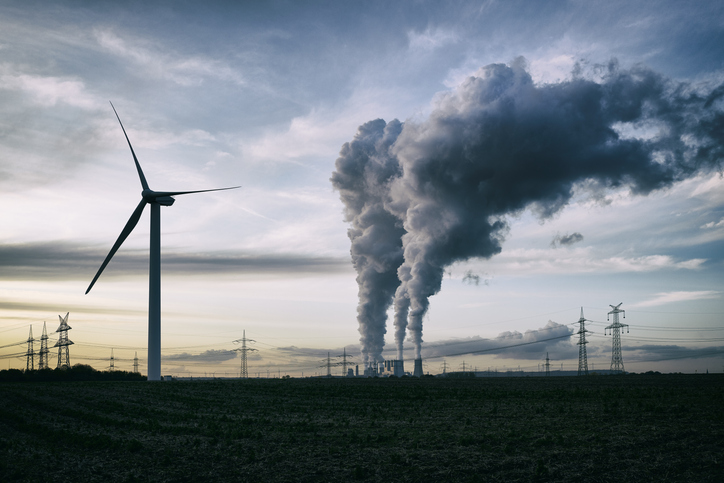
Single wind turbine, a coal burning power plant with pollution and electricity pylons in the background.

Outsmarting Climate Change: Artificial Intelligence and the Future of Greenhouse Gas Regulation

For nearly a decade, there has been a trend of decreasing industry greenhouse gas (GHG) emissions … that is, until now. According to the World Meteorological Organization, atmospheric levels of the three main greenhouse gases—carbon dioxide, methane, and nitrous oxide—all reached new record highs in 2021. In addition, these emissions have increased almost an additional 1% in the United States for 2022. Although the reason for this increase is not entirely clear, it is likely the result of both biological and human-induced processes, including a …

Continue Reading
Electricity pylon against pastel sky

As Temperatures Drop, Can States Stop Soaring Electricity Costs by Regulating Crypto Mining?

While the Trump administration has spent 2025 slamming the brakes on U.S. expansion of  renewable energy by defunding solar and wind projects, Americans have seen their electricity costs skyrocket by more than an average of 30 percent, a trend not expected to abate any time soon.

The rapid expansion of cryptocurrency mining facilities and artificial intelligence data centers throughout the United States – requiring extraordinarily high levels of energy use, taxing electrical grids and resulting in higher electrical bills for surrounding communities throughout the …

Continue Reading
EPA Offices, Washington DC

New EPA Permitting Requirements Expected to Accelerate Power Generation and Reshore Manufacturing Projects

The U.S. Environmental Protection Agency this week announced new guidance on New Source Review (NSR) preconstruction permitting requirements “to provide much needed clarity for the buildout of essential power generation and reshoring of manufacturing.”

The action, according to the agency, “provides flexibility to begin certain building activities that are not related to air emissions, such as installing cement pads, before obtaining a Clean Air Act (CAA) construction permit.”

The CAA’s NSR program is a preconstruction permitting program that requires certain stationary sources of air pollution …

Continue Reading
Sea and Sky

Jurisdiction at Depth: Updating U.S. Deep-Sea Mining Policy Under Executive Order 14285

With the rapid and exponential advancement of modern technology, there is a corresponding increase in demand for the foundational raw materials that enable such progress. Contemporary innovations, including electric vehicles, smartphones and other high-performance electronics are critically dependent on specific mineral resources such as cobalt, nickel, lithium and copper. These materials serve as indispensable components in batteries, circuitry and other essential systems, underscoring their strategic importance in sustaining technological development. Consequently, securing reliable access to these resources has become a pressing global concern.

Historically, these …

Continue Reading
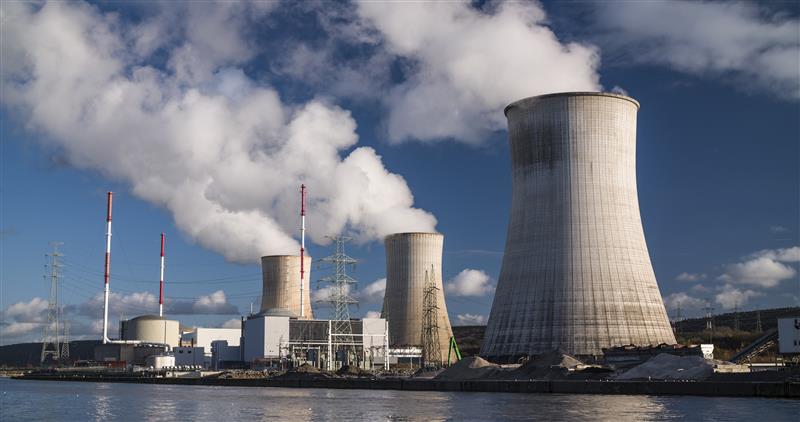
Nuclear Plant

New York State Goes Nuclear

New York Gov. Kathy Hochul announced June 25 that she is directing New York Power Authority to add at least one gigawatt of new nuclear power generation by building a zero-emission nuclear power plant somewhere in upstate New York.

This announcement, four years after the 2021 closure of the Indian Point nuclear plant due to safety concerns pertaining to nuclear waste disposal, came as a surprise to many who expected the governor to, instead, recommend cap-and-invest regulations pursuant to the Climate Leadership and Community Protection

Continue Reading
Server room with big data

Will Riding the Crypto Mining Wave Only Lead to Wipeout?

In the past couple of years, multiple states across the nation have made various attempts to attract cryptocurrency mining centers at which the virtual currency is “mined” on a colossal scale — a process requiring a significant amount of energy — through legislation and business and tax incentives (covered extensively by ELM, including here and here).

After what seemed like increasing setbacks for the cryptocurrency industry, major U.S. banks are now boasting cryptocurrency trading desks. Therefore, regardless of some states’ earlier challenges in …

Continue Reading
Nuclear reactors against blue sky

Betting on a power-industry glow-up, Big Tech goes nuclear to stop A.I.-driven energy meltdown

Artificial Intelligence is Big Tech’s newest toy. However, AI also requires massive amounts of energy to operate, which puts the industry’s climate commitments at risk. The sprawling data centers that Microsoft and other digital giants need are beginning to strain the nation’s existing power supplies. Meta Platforms recently reported last year’s emissions were roughly 70-percent above 2019 levels. Microsoft’s emissions jumped 40-percent in the three-year period through June 2023, while Google’s surged nearly 50-percent in the four years through December.

These energy needs have rapidly changed …

Continue Reading
Server room with big data

Cryptomining Faces More Legislative Hurdles in US

As cryptocurrency has increased its notoriety in the US, so has its demands on the US electrical grid. Indeed, the US is witnessing a constantly proliferating number of cryptomining facilities, which are large spaces – often former factories or defunct power plants – filled with computers using large amounts of electricity to “mine” crypto by solving mathematical equations as fast as possible. This drain on energy has been met with unease in some parts of the US, however, such as New York, which …

Continue Reading
Servers. Servers room data center. Backup, mining, hosting, mainframe, farm and computer rack with storage information. 3d rendering

Big Tech’s Investment in Geothermal Energy Continues to Heat Up

On August 26, Sage Geosystems announced an agreement to supply Meta with 150 MW of geothermal power. Sage will use its proprietary Geopressured Geothermal System (GGS) to provide carbon-free power for Meta’s data centers. This makes Meta the latest tech giant to invest in geothermal energy.  In June 2024, Google negotiated a similar deal with NV Energy for 115 MW of geothermal energy to help Google power its Nevada data center.

Data centers typically require ever increasing amounts of energy around the clock, which alternate …

Continue Reading
AI background graphic

AI – Environmental Friend or Foe?

Recently, there’s been much discussion about the potential benefits that artificial intelligence can bring to climate change regulation. 

For example, advanced technology, such as satellite data, is being used to identify large emission events — (see ELM’s recent methane rule finalization coverage here and ELM’s previous AI coverage here). AI also is being used to monitor rising sea levels along the United States’ coastlines — (see ELM’s previous sea level coverage here). 

Less consideration, however, has been given to the potential adverse impacts …

Continue Reading