city

EPA Denies New York’s Good Neighbor Request

Last week, the EPA issued a final rule denying New York state’s bid to have the EPA issue enforceable daily emissions standards for hundreds of emission sources in upwind states in order to allow the New York Metro Area and Chataqua County to comply with 2008 and 2015 national ambient air quality standards for ground-level ozone under the Clean Air Act. The EPA ruled that the state failed to prove that the upwind pollution sources are interfering with its efforts to comply with the NAAQS.…

Continue Reading


New York Continues to Lead Nation in Regulation and Removal of 1,4-Dioxane

New York continues to strengthen its regulatory approach to 1,4-dioxane. Last month, the state Department of Health adopted the nation’s first maximum contaminant level (MCL) for 1,4-dioxane in drinking water, The regulation is working its way toward implementation and is now in the public comment period. Following assessment of public comments, the proposed regulation will either be revised or submitted for adoption by the Public Health and Health Planning Council. The regulation will then go into effect upon publication of a Notice of Adoption in the New …

Continue Reading

New Analysis of Public Data Highlights Emerging Contaminant Prevalence in New York

Just this week, the New York Public Interest Research Group released a report that analyzes an array of public federal data pertaining to unregulated emerging contaminants and their prevalence in New York State. The report is noteworthy for its study of more than 20 different emerging contaminants impacting the state.

The report, titled “What’s in My Water?”, clearly notes that the mere existence of emerging contaminants does not necessarily mean that the public’s health is at risk. However, the report proclaims a call …

Continue Reading

FERC Ambivalence Leads to Pipeline Approval

In a split decision, a bipartisan four-commissioner panel of the Federal Energy Regulatory Commission (FERC) approved an application by Transcontinental Gas Pipe Line Co. LLC for a construction certificate. Transco plans to upgrade several portions of a pipeline that serves the northeast region of the country, including parts of New York City and New Jersey.

Specifically, the project involves construction of approximately 14 miles of pipeline in Pennsylvania, New Jersey, and Queens County, New York, 23 miles of offshore pipeline near Queens and Staten Island, …

Continue Reading

Third Circuit Court of Appeals Halts Construction of PennEast Natural Gas Pipeline, Must Decide Issue of Eminent Domain

Recently, we reported that the United States District Courts for the Middle District of Pennsylvania and the District of New Jersey granted a consortium of natural gas companies the right of eminent domain to take steps towards building the PennEast pipeline to connect natural gas sources in Pennsylvania to parts of New Jersey.

As the next development in this project’s complicated legal track, the Third Circuit Court of Appeals issued a stay to temporarily stop any physical construction from beginning on the pipeline in New …

Continue Reading

Emerging Contaminants: Testing Finds 1,4-Dioxane Present in Dozens of Household Products

Testing conducted by the group Citizens Campaign for the Environment, which is purportedly pushing for a New York state ban on 1,4-Dioxane in household products, has found the chemical at various levels in “65 of 80” commonly used (and commonly disposed of) high-end and less expensive personal care and detergent products. In conjunction with an uptick in 1,4-Dioxane litigation, these new studies likely provide lawyers, litigants, and other concerned parties a hint at what’s to come.

As a refresher, 1,4-Dioxane is a synthetic industrial …

Continue Reading
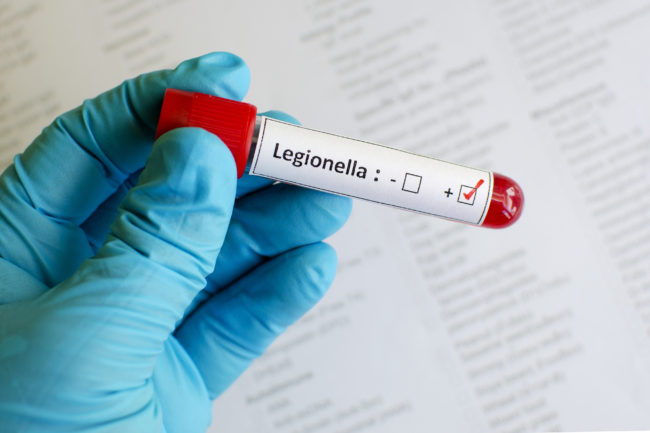
Legionella positive

Attention New York City Cooling Tower Owners and Operators: NYC Council Expands Cooling Tower Inspection Reporting Requirements

It has been three years since Legionnaires’ disease made national headlines following an outbreak surrounding the cooling tower of the Opera House Hotel in the South Bronx. Legionnaires’ disease is a serious type of pneumonia caused by the waterborne pathogen known as LegionellaIt is contracted when susceptible individuals inhale water droplets or mist containing elevated levels of legionella bacteria. New York City has as many as 1,200 towers with evaporative heat exchangers, usually installed on the top of a building as part of …

Continue Reading

1,4-Dioxane is Back in Court, Following a New and Familiar Template for Water Authority Claims

Late last week, a pair of lawsuits on water contamination were filed in the U.S. District Court for the Eastern District of New York on behalf of local water authorities. Back in the news is the emerging contaminant 1,4-dioxane, which made headlines in late 2017 in a related and similar groundbreaking lawsuit that sought to recover costs against major manufacturers for the design, construction, installation, operation, and maintenance of water treatment facilities and equipment required to remove the 1,4-dioxane from drinking water wells. The same …

Continue Reading

Nuclear NY: “ZEC” Subsidies Permitted by Second Circuit

On September 27, 2018, the Second Circuit Court of Appeals upheld the District Court’s ruling in Coalition for Competitive Elec., et al. v. Zibelman, et al., and determined that New York State’s ZEC program is neither field nor conflict preempted. No. 17-2654, 2018 WL 4622696 (2nd Cir. Sept. 27, 2018). Moreover, the court found that the plaintiffs lacked Article III standing to raise a dormant Commerce Clause claim.

In August 2016, the New York Public Service Commission (PSC) adopted the Zero Emissions Credit (ZEC) …

Continue Reading

Environmental Due Diligence: What’s The Latest On Federal Environmental Review?

Just a few days ago, the U.S. House of Representatives’ Judiciary Committee — in a tight split — voted to support a bill that seeks to target the slow pace of the permitting process for infrastructure and development projects that require review by federal agencies. The bill, named the “Permitting Litigation Efficiency Act,” is expected to impose limits on federal review of projects, i.e., an apparent two-year deadline for federal agencies to determine whether a project can go forward. Other points of the act …

Continue Reading